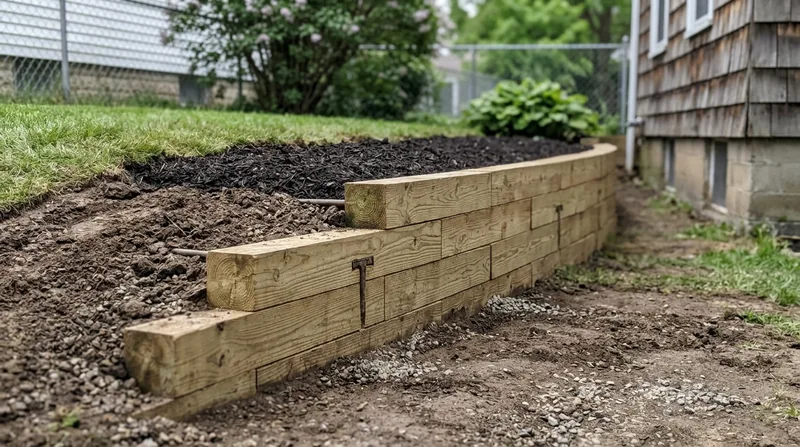




Timber retaining walls in Buffalo offer an affordable, straightforward solution for raised beds, low terraces, and gentle slope stabilization across the region's lake-plain clay and historic neighborhoods. From the Victorian homes of Allentown to the ranch subdivisions of Cheektowaga and the working-class frame cottages of South Buffalo, pressure-treated timber walls have been a go-to choice for homeowners on budget. But Western New York's relentless freeze-thaw cycle, deep seasonal frost, and heavy clay soils demand honest talk about where timber holds up and where block or stone will save you a second rebuild in five years. We install, repair, and replace timber walls across Buffalo, Amherst, Williamsville, Clarence, and beyond, and we'll tell you straight whether timber is the right call for your yard or whether a more durable material makes sense for the long haul.
Why Timber Retaining Walls Matter in Buffalo's Wet Clay Landscape
Buffalo sits at the eastern end of Lake Erie where the Niagara River begins, built on flat lake-plain clay and silt that holds water like a sponge through the winter thaw and spring rains. When a slope starts to slump or a garden bed needs containment, a timber retaining wall goes up fast and costs less than poured concrete or segmental block. The problem is that pressure-treated lumber in Buffalo's saturated soils and deep frost cycles faces real wear. Without proper drainage and footing depth, timber walls shift, lean, and rot within a decade, especially in North Buffalo, Kenmore, and West Seneca where the water table sits high and freeze-thaw action is relentless.
- Timber walls work best for raised beds under 3 feet tall where budget drives the decision and the wall does not support a driveway or structure.
- Pressure-treated lumber resists rot better than untreated wood but still requires a solid footing below the frost line, typically 3 to 4 feet deep in Buffalo.
- Proper drainage behind and below the wall is essential to prevent water buildup that accelerates wood decay and pushes the wall outward.
- We assess your soil type, water table, and slope angle to tell you whether timber will last 10 years or whether block or stone is the smarter long-term investment.
Getting a straight answer on timber durability in your specific yard means understanding Buffalo's soil and climate, not just the cost per linear foot.
Key info: Buffalo's lake-plain clay drains slowly and freezes deep (3 to 4 feet minimum frost depth). A timber wall without a proper footing and drainage system will shift, heave, and rot faster than in drier regions. Check the Erie County Building Department permit thresholds before you build, especially if your wall is taller than 4 feet or supports a surcharge like a driveway.
For detailed guidance on permits and regulations in your area, visit the Erie County Planning Department.
How We Install and Repair Timber Retaining Walls in Buffalo
We start with a site visit to measure the slope, identify soil conditions, and determine whether the wall needs a permit under Buffalo or your township's rules. If you have an existing timber wall that's leaning, we assess whether repair is possible or replacement is the better path. For new installations, we dig the footing below the frost line, set treated posts or timbers, backfill with gravel and drainage fabric, and compact the soil to prevent settlement. Every step matters in Western New York's clay because a shallow footing or poor drainage will fail under the weight of saturated soil and frost heave.
- We excavate the footing to 3 to 4 feet deep, below the frost line, to prevent heave and shifting caused by seasonal freeze-thaw cycles.
- We set treated posts or timbers with proper spacing and secure them with galvanized hardware rated for outdoor use and soil contact.
- We install drainage fabric and gravel behind the wall to channel water away from the wood and reduce hydrostatic pressure.
- We compact the backfill in lifts to ensure the wall stays plumb and does not settle unevenly as the soil consolidates.
- For repairs, we shore up the wall temporarily, identify the cause of failure (poor footing, inadequate drainage, or wood decay), and recommend repair or replacement.
A timber wall installed correctly in Buffalo will perform well for 10 to 15 years; without proper drainage and footing depth, it will fail in half that time.
Local example: A homeowner in Orchard Park had a timber wall installed in 1998 that shifted and rotted by 2012 because the contractor dug only 18 inches deep and did not install drainage. We replaced it with a segmental block wall on a proper footing, and it has stayed plumb and dry for over a decade. The lesson: in Buffalo's clay and frost, timber requires the same care as any other wall material.
If you have a leaning or failing timber wall, leaning and collapsed wall repair covers the full assessment and remediation process.
Timber Retaining Walls Methods and Approaches
| Approach | Description | Best for |
|---|---|---|
| Pressure-Treated Post and Timber | Posts set below frost line, horizontal timbers bolted or spiked to posts, pressure-treated lumber rated for soil contact (typically .40 or .60 retention). | Raised beds, low terraces under 3 feet, budget-conscious installations where durability is secondary to cost. |
| Timber Wall Repair (Partial) | Replace rotted or damaged timber sections without removing the entire wall, reinforce posts, upgrade drainage, install new caps. | Existing walls with localized decay or minor lean, when the footing is still sound and the wall structure is salvageable. |
| Timber Wall Replacement | Remove the old wall completely, excavate and reset footing, install new pressure-treated timbers or upgrade to block or stone. | Failed timber walls, major lean or structural compromise, situations where a more durable material (block, stone) is preferred for the long term. |
| Timber Wall with Enhanced Drainage | Standard timber construction plus perforated drain pipe, filter fabric, and gravel backfill to manage water and extend wall life in high-water soils. | Buffalo clay soils, areas with high water table or poor surface drainage, walls supporting a slope with active seepage. |
Timber Retaining Walls Cost in Buffalo: What to Expect
Timber retaining walls in Buffalo start at around $20 per square foot for a basic pressure-treated installation on level ground with good access and simple drainage. That price assumes a wall under 3 feet tall, post-and-timber construction, and no permitting complications. The cost moves up when the wall is taller, the site is difficult to access, the soil is especially wet or unstable, or you need engineered drawings for a permit. A 20-foot wall that is 3 feet tall runs roughly $1,200 to $1,600 before permits and site prep; a 30-foot wall that is 4 feet tall with enhanced drainage and a permit can reach $3,000 to $4,500.
We always recommend getting two or three estimates from insured contractors because the footing depth, drainage approach, and material choice vary based on the specific site. A contractor who digs shallow to save money will cost you more in repairs five years later. For a detailed breakdown of pricing across all our services and material types, visit our full pricing overview.
Factors that affect timber wall cost include: soil type and water table depth (clay costs more to drain), wall height and length, footing depth required by frost line and permit, access for equipment and material delivery, and whether you need retaining wall drainage upgrades to manage water in saturated soils.
Timber Retaining Walls Near Me: What Buffalo Homeowners Should Know When Hiring a Contractor
Hiring the right contractor for a timber retaining wall in Buffalo means checking three things: licensing and insurance, understanding your local permit requirements, and getting multiple estimates so you know what you are paying for. Many homeowners assume a timber wall is simple enough to DIY or hire a handyman, but a wall that fails in five years because the footing is shallow or drainage is missing costs far more to replace than doing it right the first time. Ask any contractor for proof of liability insurance, and verify they understand Buffalo's frost depth (3 to 4 feet minimum), clay soil conditions, and permit thresholds for your specific township or city.
- Confirm that the contractor is fully insured for retaining wall work in your jurisdiction (Buffalo, Amherst, Williamsville, Clarence, or other service areas).
- Ask whether a permit is required for your wall height and whether the contractor handles the permit application or leaves it to you.
- Request references from homeowners in your neighborhood or similar Buffalo subdivisions and check whether their walls have stayed plumb and dry.
- Get a written estimate that specifies footing depth, drainage approach, material grade, and timeline so there are no surprises when the work starts.
- If your yard has an HOA or historic district rules, confirm that the contractor understands setback, height, and material restrictions before you sign a contract.
A contractor who takes time to explain the why behind footing depth and drainage is the one you want, because that knowledge is what keeps your wall standing through Buffalo's freeze-thaw winters and wet springs.
Ready to discuss your timber wall project with a licensed professional? Contact Buffalo Retaining Wall for a free estimate at (716) 589-2564.
Timber Retaining Walls in Buffalo: Pricing Guide
| Service | Price | Details |
|---|---|---|
| Timber wall installation (basic) | Starting at $20/sq ft | Pressure-treated posts and timbers, footing below frost line, basic gravel backfill, walls under 3 feet tall with good access |
| Timber wall with enhanced drainage | Starting at $28/sq ft | Includes perforated drain pipe, filter fabric, and gravel backfill to manage water table and extend wall life in Buffalo clay |
| Timber wall repair or partial replacement | Starting at $35/sq ft | Replace rotted sections, reinforce posts, upgrade drainage, or repair lean without full removal; cost varies by damage extent and accessibility |
| Complete timber wall replacement | Starting at $25/sq ft | Remove failed wall, reset footing below frost line, install new pressure-treated timbers or upgrade to block or stone material |
| Permit and site assessment | Included | Free on-site evaluation, footing depth verification, drainage review, and guidance on local permit requirements before installation begins |
| Free estimate | No obligation | Response within 24 hours at (716) 589-2564; includes photos, measurements, and cost breakdown for your specific site and conditions |
Indicative pricing, the exact cost depends on square footage, finish, and site access. Free personalized estimate within 24h at (716) 589-2564.


