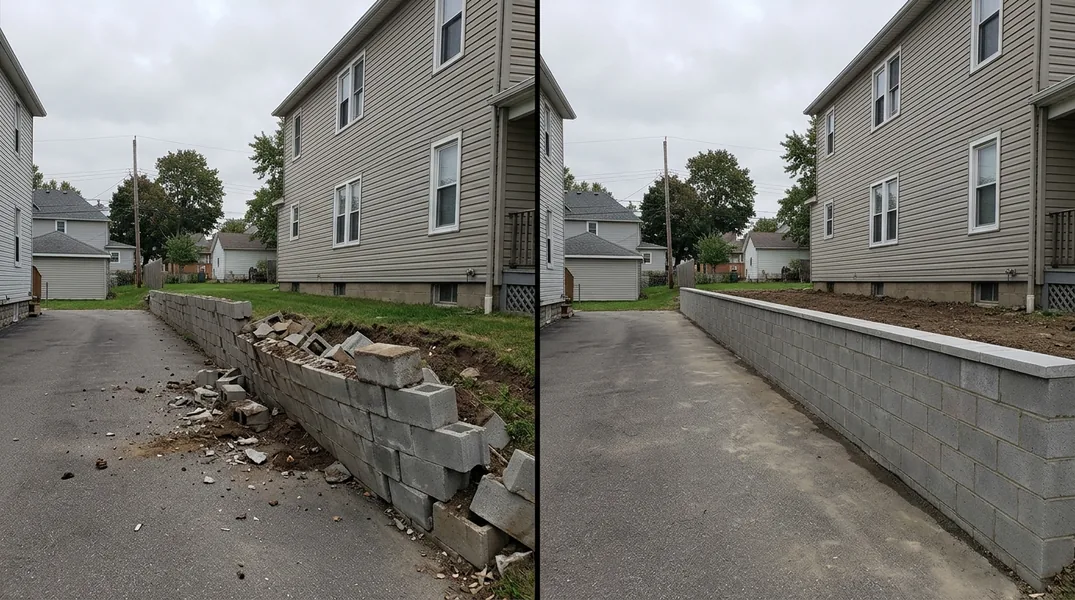
Why Buffalo's Clay Soil Is So Hard on Retaining Walls
If you live in Buffalo, you already know the weather can be tough. But the real challenge for retaining walls is often underground. Much of the region sits on heavy, dense clay that behaves very differently from sandy or loamy soil. When it rains, clay absorbs water slowly and holds it, expanding as it does. When it dries out, it shrinks and cracks. That constant cycle of swelling and shrinking puts enormous pressure on any wall built to hold back soil.
This is why so many walls in older neighborhoods start to lean or crack after just a few seasons. A wall that would last decades in a drier climate can start showing problems in half that time here. The clay doesn't just push from behind. It also creates poor drainage, so water pools at the base of the wall and softens the footing. Add in freeze-thaw cycles from Buffalo winters, and you have a recipe for movement. Understanding this local soil reality is the first step toward building a wall that actually lasts.
Warning Signs of a Failing Retaining Wall
Catching a problem early can save you thousands of dollars. The most obvious sign is a leaning retaining wall. A slight tilt might seem harmless, but it usually means the soil behind the wall is pushing harder than the wall can resist. If the top of the wall has moved more than an inch or two out of plumb, it's time to take it seriously. Another common warning is a bowing retaining wall, where the middle of the wall bulges outward. This often happens when water pressure builds up because the drainage system is clogged or was never installed correctly.
Look for cracks in the wall surface, especially horizontal cracks that run along the mortar joints or through concrete blocks. Vertical cracks can also appear as the wall settles unevenly. You might notice soil washing out from around the base or small sinkholes forming behind the wall. Gates or fences attached to the wall may start sticking because the structure has shifted. Any of these signs point to a wall under stress, and ignoring them usually leads to bigger, more expensive problems. A bowing retaining wall fix is much simpler when addressed early.
Retaining Wall Repair Near Me: When to Call a Professional
Some homeowners try to patch cracks or add a fresh coat of paint, hoping the problem will go away. But cosmetic fixes don't address the underlying cause, which is almost always water and soil pressure. If you're searching for retaining wall repair near me in the Buffalo area, it's probably because you've noticed movement that worries you. A professional can assess whether the wall can be stabilized with targeted repairs or whether it needs to be rebuilt. For minor issues, options like helical anchors, improved drainage, or partial rebuilding can extend the life of the wall without a full replacement.
For walls that are severely leaning or showing multiple failure points, Retaining Wall Repair may not be enough. In those cases, a full Retaining Wall Replacement is often the safer and more cost-effective long-term solution. A local contractor who understands clay soil can recommend the right approach and use materials suited to the conditions. If you're in Amherst or Williamsville, the soil challenges are similar, so don't wait until the wall is ready to collapse.
How Proper Installation Prevents Costly Failures
The best way to avoid expensive repairs is to get the installation right the first time. A wall built for Buffalo clay needs a deep, stable base that extends below the frost line. It also needs a well-designed drainage system, typically a gravel backfill and perforated pipe that directs water away from the wall. Without that, hydrostatic pressure will build up and push the wall over, no matter how strong the blocks are. Proper compaction of the soil behind the wall is equally important, because loose fill settles and creates voids that lead to movement.
Choosing the right materials matters too. Concrete Retaining Walls are often a smart choice for clay lots because they resist moisture damage and can be engineered to handle higher loads. Segmental block walls can also work well when installed with the right geogrid reinforcement. If you're planning a new wall, Retaining Wall Installation by an experienced local crew is an investment in durability. For homeowners in Clarence, where lots often slope, proper engineering is especially critical.
What Retaining Wall Repair Costs in Buffalo
Homeowners often ask what a bowing retaining wall fix or a full replacement will cost. The honest answer is that it depends on the wall's height, length, and the extent of the damage. Minor repairs like crack injection or drainage improvements are usually the least expensive option, while rebuilding a large wall can run into the tens of thousands of dollars. Because every situation is different, the best way to get a realistic number is to have a professional inspect the wall and provide a written estimate. You can review general pricing guidelines on our site, but a site visit is the only way to know for sure.
It's also worth considering the cost of doing nothing. A failing wall can lead to soil erosion, damage to your landscaping, and even structural issues with nearby foundations or driveways. In some cases, a collapsed wall can be a safety hazard. Spending a few hundred dollars on an inspection now can help you avoid a much larger bill later. If you're in Buffalo and notice any warning signs, reach out for a free estimate or call (716) 589-2564 to schedule a professional assessment.
Looking for a professional retaining wall contractor in Buffalo? Buffalo Retaining Wall responds fast for all your retaining wall needs.
Get a Free QuoteOur services: Retaining Wall Installation · Retaining Wall Repair · Retaining Wall Replacement